REQUEST A QUOTE

/News
Maximising your EPC Grade – do you have a VRF air-con system?
In the UK, achieving a high Energy Performance Certificate (EPC) grade is a priority for building owners and managers. A better EPC rating not only showcases your commitment to energy efficiency but also boosts property value and attracts eco-conscious tenants. One critical yet often overlooked factor that can elevate your EPC grade is the type of air conditioning system installed in your building.
At Vital Direct, we’ve noticed a recurring challenge in the industry: the misidentification of VRF (Variable Refrigerant Flow) air conditioning systems. Too often, these advanced systems are mistaken for Fan Coil units, resulting in lower EPC grades than buildings deserve. In this article, we’ll break down what a VRF system is, why it can improve your EPC rating, and how to ensure your system is correctly identified to maximize your building’s energy efficiency.
What is a VRF System?
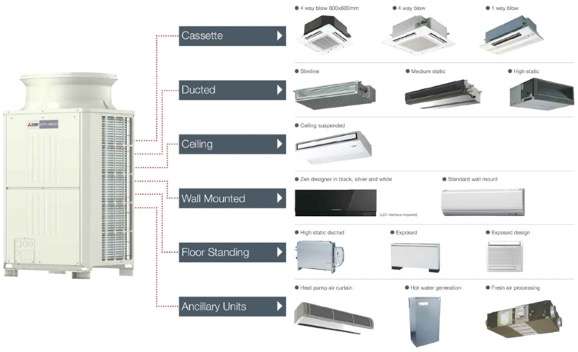
A VRF system is a cutting-edge air conditioning technology that provides both heating and cooling with exceptional efficiency. Unlike traditional systems, VRF systems use refrigerant (such as R410A) as the medium to transfer heat, enabling precise temperature control across multiple zones. This flexibility makes them ideal for a variety of indoor units, including floor-standing, ducted, ceiling cassettes, wall-mounted, and even air curtains.
What sets a ‘true’ VRF system apart is its ability to integrate fresh air ventilation through an Air-Handling Unit (AHU). This all-in-one system handles heating, cooling, and ventilation, delivering superior energy efficiency that’s recognised by the UK government’s EPC software. Whether you manage a small office or a sprawling commercial complex, VRF systems offer a scalable solution tailored to your building’s needs.
Why VRF Systems Improve EPC Grades
The UK’s EPC software assigns higher grades to buildings with VRF systems because they consume significantly less auxiliary energy—the power used by fans, pumps, and other components—compared to Fan Coil systems. This efficiency translates into a better EPC rating, reflecting your building’s lower energy footprint.
However, this advantage hinges on accurate identification during the EPC assessment. Mislabeling a VRF system as a Fan Coil unit—often due to outdated labeling habits or a lack of technical understanding—can unfairly downgrade your rating. At Vital Direct, we’ve seen this happen far too frequently, and it’s a costly mistake that can be easily avoided with the right expertise.
How to Identify a VRF System
Telling a VRF system apart from a Fan Coil system isn’t always straightforward, especially when key components are tucked away out of sight. Here’s how you can spot the difference:
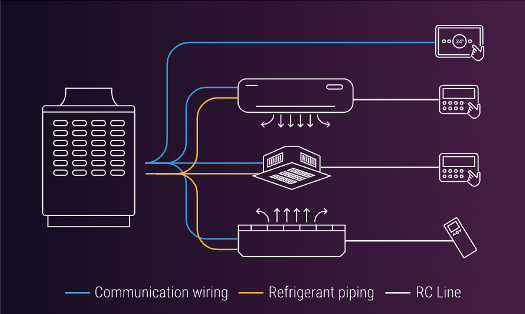
- What flows in the pipes? VRF systems circulate refrigerant from outdoor condensers to indoor units. Fan Coil systems, on the other hand, rely on chilled water and hot water, typically sourced from a boiler and chiller.
- Integrated ventilation: A ‘true’ VRF system includes an AHU for fresh air ventilation, combining heating, cooling, and air quality management in one setup.
- Indoor unit design: VRF indoor units tend to be more compact and versatile, offering advanced control options compared to their Fan Coil counterparts.
Still unsure? Ask your air conditioning engineer the simple question: “What flows in the pipes?” If the answer is refrigerant, you might have a VRF system on your hands. At Vital Direct, our skilled energy assessors specialize in identifying these systems accurately, ensuring your EPC grade reflects your building’s true potential.
The Importance of Accurate EPC Assessments
Getting your EPC assessment right matters more than you might think. Here’s why:
- Legal Compliance: In the UK, a valid EPC is mandatory when selling or leasing a building.
- Cost Savings: Higher energy efficiency means lower running costs and a reduced carbon footprint.
- Property Value: Buildings with top EPC grades are more appealing to buyers and tenants, potentially increasing market value.
- Incentives: Certain government programs and grants are only available to properties meeting specific EPC thresholds.
By correctly identifying your air conditioning system, you unlock these benefits and position your building as a leader in energy performance.
Case Study: A Real-World EPC Boost
Take the example of a recent Vital Direct client—a commercial property owner gearing up to sell their building. The initial EPC assessment flagged their air conditioning as Fan Coil units, yielding a disappointing C rating. After our team stepped in, a closer inspection revealed a fully integrated VRF system.
Once we updated the EPC calculation, the building jumped to a B rating—a game-changer for the sale. This not only highlighted the property’s energy efficiency but also made it more competitive in a sustainability-focused market. It’s a clear example of how Vital Direct’s expertise can turn a routine assessment into a significant win.
Busting Common VRF Myths
Misunderstandings about VRF systems often fuel confusion. Let’s clear up a few:
- Myth 1: All multi-unit systems are VRF. Not true—Fan Coil systems can also have multiple units, but they lack the refrigerant-based efficiency of VRF.
- Myth 2: VRF is only for big buildings. VRF technology scales to fit everything from small offices to large complexes.
- Myth 3: VRF systems are hard to maintain. While sophisticated, they’re built for reliability and straightforward upkeep when handled by professionals.
Dispelling these myths helps building owners appreciate the value of their air conditioning systems and make informed decisions.
Why Choose Vital Direct?
At Vital Direct, we bring clarity to the complex world of EPC assessments. Our experienced energy assessors know the ins and outs of VRF vs Fan Coil systems, ensuring your building gets the rating it deserves. We’re here to help you maximise your EPC grade, enhance energy efficiency, and future-proof your property.